
What you should know about type systems
I read today, a really good essay on type systems. It covers what they can be used for and the differences between dynamic and static systems (although the word ‘type’ is used in both, it doesn’t mean the same thing…
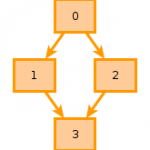
The Good IR: Multiple Returns
This post is part of a seres: The Good IR (BasicBlocks and control flow instructions) The Good IR: Other Control Flow Structures The Good IR: Instructions and Values The Good IR: Reporting Semantic Errors via Type Checking The Good IR:…
The Good IR: Reporting Semantic Errors via Type Checking
This post is part of a seres: The Good IR (BasicBlocks and control flow instructions) The Good IR: Other Control Flow Structures The Good IR: Instructions and Values The Good IR: Reporting Semantic Errors via Type Checking The Good IR:…
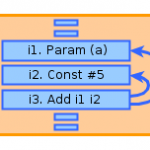
The Good IR: Instructions and Values
This post is part of a seres: The Good IR (BasicBlocks and control flow instructions) The Good IR: Other Control Flow Structures The Good IR: Instructions and Values The Good IR: Reporting Semantic Errors via Type Checking The Good IR:…
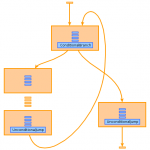
The Good IR: Other Control Flow Structures
This post is part of a seres: The Good IR (BasicBlocks and control flow instructions) The Good IR: Other Control Flow Structures The Good IR: Instructions and Values The Good IR: Reporting Semantic Errors via Type Checking The Good IR:…
Transforming Heuristics
Many of the real problems in the world are NP. Things like Scheduling, Register Allocation, Routing packages, etc. In solving these really hard problems, we invent heuristics. Typically such heuristics are specific to the problem domain. For example, UPS might…
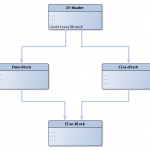
The Good IR
This post is part of a seres: The Good IR (BasicBlocks and control flow instructions) The Good IR: Other Control Flow Structures The Good IR: Instructions and Values The Good IR: Reporting Semantic Errors via Type Checking The Good IR:…
Project Course in Web Services
I’ve just finished reading Phillip Greenspun’s experience report, Teaching Software Engineering, which details a project course in building Web Services. Even though I personally, hate the Web’s architecture (but that’s a rant for some other time), it still remains as…
Separating the Wheat from the Chaff
From Coding Horror: Separating Programming Sheep from Non-Programming Goats I learned of a paper, The camel has two humps, which describes a test that allows teachers to differentiate students likely to do well studying computer science from those who will…
Business as an Investment
I finished my reading of Mike Maloney’s Guide to Investing in Gold and Silver, partially to get an idea of how he got started in the business of bullion. He’s actually had several businesses throughout his life, including one where…