eric the fruitbatBlog
Sounding out the Noosphere.

Posts from January, 2009

Stump the Professor

Posted by Eric Hennigan
On January 22nd, 2009 at 00:01

Permalink | Trackback | Links In |

Comments (2) |
Posted in Religion, Self

The Campus Crusade for Christ at UCI is has invited a certain Jon Rittenhouse to stand in front of an audience and defend his faith. They kindly offer a prize of $100 to anyone if they ask a question to which he is unable to give a satisfactory answer (as judged by a panel consisting of one unassertive atheist, a UCI professor, and a CCC member). I don’t expect to receive any money for my efforts at the event (as Jon has been doing this for quite awhile, and is most probably a gifted orator) but I do want to provide myself with a quick list of some arguments to use against him.

  • The Hitchen Challenge: Name me an ethical statement made or an action performed by a believer that could not have been made or performed by a non-believer.
  • Gay Love of David and Jonathan: article with scripture citation and wikipedia
  • Epicurius’ Riddle:

    If God is willing to prevent evil, but is not able to: Then He is not omnipotent.
    If He is able, but not willing: Then He is malevolent.
    If He is both able and willing: Then whence cometh evil?
    If He is neither able nor willing: Then why call Him God?”

  • Biblican Inaccuracies: an intro page and infidel list of scripture
    A quick point: Who incited David to count the fighting men of Israel? God (2 Samuel 24:1) or Satan (1 Chronicles 21:1)?
  • Pascal’s Wager: rational wiki
  • Also remember: PBS did a special called “The Bible’s Buried Secrets”
    • The Old Testament was written in the sixth century BC and hundreds of authors contributed.
    • Abraham, Sarah and their offspring didn’t exist.
    • There is no archaeological evidence of the Exodus.
    • Monotheism was a process that took hundreds of years.
    • The Israelites were actually Canaanites.
    • The Israelites believed that God had a wife.
  • Baron Raglan wrote a book titled “The Hero” which sets forth a formula for successful mythological heroes.
  • Hector Avalos has a book that sets forth the idea that Christianity was an Old World Heath movement (this explains why there is such a focus on miraculous healing
  • Why does Jesus ever ask God for help with anything, if God == Jesus?
  • The great plan for salvation:
    John Bice in “A 21st Century Rationalist in Midieval America” says:
    They believe that a man named Jesus — whose return they have been anxiously awaiting for nearly 2,000 years — was born of a virgin and physically resurrected after death. They believe an all-powerful and all-loving God (a three-in-one multipurpose ϋber-being consisting of a Father, Son, and some ill-defined entity called the “Holy Ghost”) sent Jesus, his son, who is also himself, to earth to be brutally tortured and killed for humanity’s collective sins. Further, they believe that only by accepting this story, and through a steadfast faith in Jesus, and his convolutedly meaningless “sacrifice,” can any human being travel the path toward eternal salvation. An eternity burning in hell awaits the rest of humanity for finite sins committed during a single lifetime.

    Julia Sweeny in “Letting Go of God” mentions:

    Why would a God create people so imperfect, then blame them for their own imperfections, then send his son to be murdered by those imperfect people to make up for how imperfect those people were, and how imperfect they were inevitably going to be?

Axiom of Abortion

Posted by Eric Hennigan
On January 19th, 2009 at 22:01

Permalink | Trackback | Links In |

Leave a Comment |
Posted in Idiocracy, Math, Politics

Recently the ever popular doughnut chain, Krispy Kreme, got in trouble for supporting our new political administration.

Krispy Kreme Doughnuts, Inc. (NYSE: KKD) is honoring American’s sense of pride and freedom of choice on Inauguration Day, by offering a free doughnut of choice to every customer on this historic day, Jan. 20.

Somehow, the wording of this rather innocuous invitation for free doughnuts, has led some to accuse Krispy Kreme of being “pro-choice,” which translates to pro-abortion; which is also a party political position of the Democratic Party. Of course, the American Life League would take it that way, given their entire existence is predicated on that viewpoint.

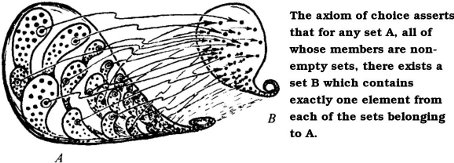
Upon discussing this bit of hilarity with my friends, we almost immediately jumped to the conclusion that ZFA set theory must be pro-abortion because of the (highly contentious) Axiom of Choice. This must be what separates the Democratic mathematicians from the Republican ones. It’s not all that nonsense about the Banach-Tarski paradox, it’s about Abortion! I get it now!

Preventing Cascade Failure in Networks

Posted by Eric Hennigan
On January 9th, 2009 at 01:01

Permalink | Trackback | Links In |

Leave a Comment |
Posted in Engineering, Ideas

For some reason I was thinking about the cascade failure problem that I mentioned before my Holiday Hiatus. I discovered that this problem has gone largely unsolved when attending ACSAC ‘08, and it’s been in the back of my mind (and on my whiteboard) since then. I’ve looked online a bit to see wether any researchers are attacking the problem, and it seems that very few are. Most of the work is also around containment of the failure rather than prevention. Most of the solutions resemble burning swaths of trees to save the forest from a fire; this disgustingly requires global knowledge of the network. Also, the systems today seem to me to be built rather naively: nodes very simply reroute traffic based on failure, without taking into account the possibility that in so doing they might overtraffic their neighbors, and thus trigger a cascade. There also seems to be a lack of information in textbooks about running networks near capacity (this is desired for efficient utilization of the network, but can drastically increase the probability of cascade).

So, I want to introduce a few constraints and assumptions before I state my rough solution. Assuming the network can be viewed as a graph with nodes and edges, where some goods (power, packets, traffic) is flowing along edges from one node to another, I’d prefer a solution that used local knowledge (node capacity, and possible neighbor capacities) instead of global knowledge. So I’ll assume that each node can keep track of how much stuff is flowing through it, and what the traffic patterns actually are; that is: how much stuff goes from edge 1 to edge 2.

In computer networks it is also possible for a node to track the possible re-routings that certain packets can take and still arrive at their destination. (I don’t know wether this is true of power delivery in the electric grid, but I’m going to assume that something analogous still holds.) Each node will be responsible for measuring traffic capacity: That is for each stream of traffic, it will keep track of what other edges could have had that traffic routed onto them. Each node will also observe a capacity constraint: It will discourage traffic that cannot be re-routed if the primary edge for that traffic suddenly fails. In this way we can keep a reserve capacity in case of edge failure.

When an edge fails, the node will re-route its current traffic in a load balanced manner along the secondary edges available for that traffic. This will temporarily violate the reserve capacity constraint, but not over-traffic other nodes. [Actually I don't think this is true, unless the node can use capacity info from its neighbors] In this way, outage of a single edge cannot trigger a cascade failure, because enough reserve capacity is always available for the traffic that was allocated to the failed edge.

    Still to be addressed:

  • Node failures which can cause multiple simultaneous edge failures.
  • Characterize the efficiency in terms of what is kept as reserve capacity and theoretical max capacity in the naive systems
  • Formalize the measurements taken by each node
  • Investigate push vs pull flows (power grid is demand based, computer networks are push)
  • Do nodes still need a means of capping their flow? (can the power grid drop packets?) I’d prefer not to require this.
  • Specify what each node is to communicate to its neighbors
  • Investigate the use of probability for multiple node failures (earthquake, software bug). Failures are not generally identically distributed or independent